
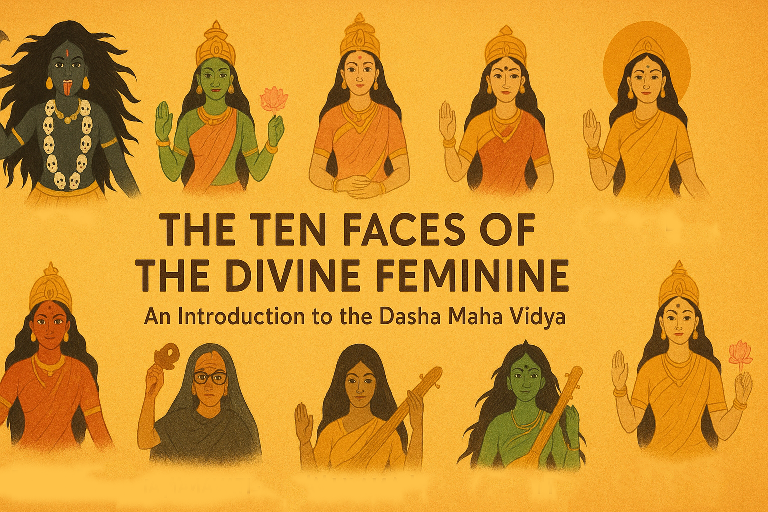
The Feminine Power Behind Yoga
When we step onto our mats, many of us in the West think of yoga as a way to stretch, breathe, and quiet the mind. But yoga also has a deep spiritual lineage that speaks to the power of the Divine Feminine—not as a distant goddess in the sky, but as energy, presence, and wisdom living within us.
In Tantra, this wisdom is expressed through the Dasha Maha Vidya, or “Ten Great Wisdom Goddesses.” These aren’t just mythical beings. They’re living archetypes—different faces of Shakti, the cosmic feminine force. By understanding them, we can unlock new dimensions of our practice: courage, compassion, surrender, creativity, and above all, wholeness.
This blog is a gentle introduction to the Ten Goddesses. Think of it as meeting ten wise teachers, each with her own lessons for your inner journey.
Why Ten Goddesses?
In Tantra, the Divine Feminine is seen as infinite, too vast to be captured in one form. So she reveals herself in many ways. Some forms are nurturing and gentle. Others are fierce, even unsettling. Together, they remind us that spirituality is not just about bliss—it’s about embracing the full spectrum of life: light and shadow, birth and death, love and detachment.
Meet the Ten Wisdom Goddesses
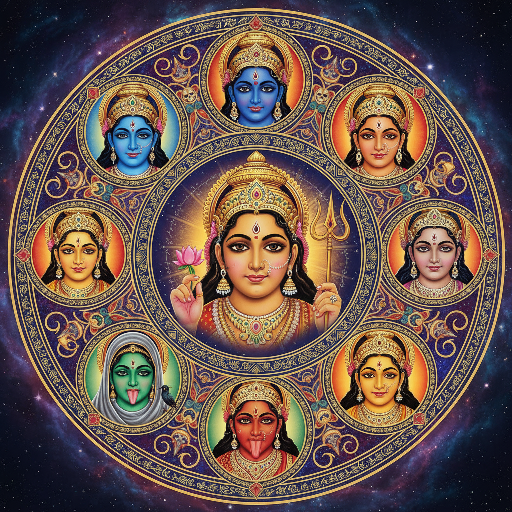
1. Kali: The Fierce Liberator
- Image: Wild, dark, fierce, adorned with skulls.
- Lesson: Kali cuts through illusion. She reminds us to let go of ego and fear.
- Yoga Connection: Shadow work, releasing old habits, practicing poses that bring courage (like Warrior II).
Kali asks us to face the truth of impermanence. On the mat, this might look like exhaling what no longer serves us, or embracing intensity in a posture rather than avoiding it.
2. Tara: The Compassionate Guide
- Image: Gentle, protective, holding a lotus.
- Lesson: Tara carries us across the ocean of suffering with compassion.
- Yoga Connection: Loving-kindness meditation, restorative yoga, heart-openers.
Tara whispers: you are not alone. She is the embodiment of divine friendship, a reminder to soften, to be kind—to ourselves and others.
3. Shodashi (Tripura Sundari): The Radiant Beauty
- Image: A youthful goddess, seated on a lotus, glowing with grace.
- Lesson: She represents perfection, beauty, and the bliss of higher consciousness.
- Yoga Connection: Practices that awaken joy and gratitude, like heart-centered meditations or chanting.
Shodashi reminds us that true beauty is the light of awareness shining through us.
4. Bhuvaneshwari: The Queen of Space
- Image: Vast and expansive, holding the universe.
- Lesson: She is spaciousness itself—the cosmic womb.
- Yoga Connection: Meditations on space, savasana as expansion, breath awareness.
When we feel small or trapped, Bhuvaneshwari invites us to expand into limitless awareness.
5. Bhairavi: The Goddess of Inner Fire
- Image: Radiant, fiery, glowing with determination.
- Lesson: She awakens willpower, discipline, and courage.
- Yoga Connection: Breath of fire (kapalabhati), strong asanas, tapas (inner heat).
Bhairavi is the fire that transforms practice from routine into devotion.
6. Chinnamasta: The Self-Sacrifice
- Image: A bold goddess who cuts off her own head, feeding others with her blood.
- Lesson: She teaches surrender of ego, the paradox of giving and receiving.
- Yoga Connection: Deep pranayama, humility in practice, learning to trust.
Chinnamasta looks terrifying, but her message is beautiful: we grow by letting go.
7. Dhumavati: The Grandmother Spirit
- Image: An old, widowed goddess, riding a crow.
- Lesson: She represents emptiness, detachment, and wisdom born from loss.
- Yoga Connection: Yin yoga, silence, meditation on impermanence.
Dhumavati reminds us that solitude is not loneliness—it’s a portal to inner wisdom.
8. Bagalamukhi: The Paralyzer of Illusion
- Image: Golden goddess who stills the tongue of enemies.
- Lesson: She brings stillness, stopping destructive thoughts.
- Yoga Connection: Breath retention (kumbhaka), mindfulness, mantra meditation.
Bagalamukhi is the power of pause—an antidote to the restless mind.
9. Matangi: The Outcast Muse
- Image: Wild, green-skinned goddess playing the veena.
- Lesson: She represents unconventional wisdom, creativity, and self-expression.
- Yoga Connection: Chanting, singing, journaling, free-flow yoga.
Matangi invites us to embrace authenticity—even the parts of ourselves society rejects.
10. Kamala: The Lotus of Abundance
- Image: Beautiful, golden, seated on a lotus, showering blessings.
- Lesson: Kamala is abundance, prosperity, and harmony with nature.
- Yoga Connection: Gratitude practices, yoga in nature, meditation on abundance.
Kamala teaches us that true wealth is not possessions—it is the joy of being alive.
How the Ten Goddesses Shape Our Yoga Journey
The Dasha Maha Vidya are like mirrors for the soul. Some may feel familiar, others uncomfortable. The invitation is to meet them all, just as we meet every breath in yoga.
- Kali says: face your fear.
- Tara says: soften your heart.
- Bhuvaneshwari says: expand your awareness.
- Dhumavati says: don’t fear endings.
- Kamala says: trust in life’s abundance.
In this way, the goddesses are not “out there”—they are within us.
How to Begin Working with Them This Navratri
Navratri, the festival of the Goddess, is the perfect time to connect with the Dasha Maha Vidya. Here are gentle entry points:
- Meditate: Choose one goddess who resonates and sit quietly with her image or mantra.
- Journal: Ask, “What lesson does this archetype bring into my life right now?”
- Practice: Dedicate your yoga to embodying her qualities—strength, compassion, creativity, or surrender.
- Chant: Even a simple mantra like “Om Shakti” can open a doorway to the feminine within.
Closing Reflection
The Dasha Maha Vidya remind us that the path of yoga is not just about stretching the body, but about expanding the soul. By meeting these ten goddesses, we learn to embrace the full spectrum of life—joy and sorrow, light and shadow, beginnings and endings.
This Navratri, may you meet each face of the Divine Feminine not as myth, but as your own inner teacher. For the goddess is not separate—she is the wisdom already alive in you.