
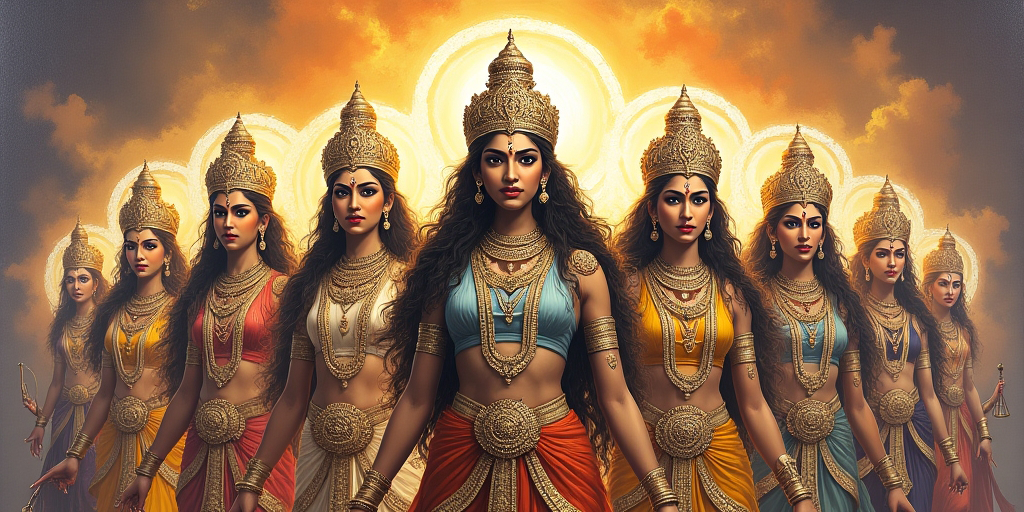
Navratri is one of the most celebrated and spiritually rich festivals in India. Across nine nights and ten days, the Divine Feminine—worshipped in her many forms such as Durga, Lakshmi, and Saraswati—is honored through rituals, fasting, music, dance, and devotion. Temples glow with lamps, streets echo with bhajans, and homes are filled with offerings of flowers and fruits.
But beyond the rituals and traditions, Navratri carries a deeper message: the goddess we worship is not only outside us, in temples and idols, but also within us, waiting to be awakened as Shakti—the life force, the creative power, the energy of transformation.
In today’s busy, modern world, we often forget that spiritual festivals are not only about outer celebration but also about inner realization. Navratri, when understood with this perspective, becomes a nine-night journey inward—a time to cleanse, reflect, and awaken the divine feminine within.
What is Shakti?
In Sanskrit, the word Shakti means power, energy, or force. It is considered the dynamic, creative principle of the universe. If Shiva represents pure consciousness, Shakti represents the movement, the manifestation, the flow of life itself. Without Shakti, even the highest awareness remains still; with Shakti, creation blossoms.
In human life, Shakti is experienced as vitality, willpower, compassion, intuition, resilience, and creativity. When we recognize this, we stop seeing the goddess only as a distant deity and start seeing her presence in our daily lives.
- When a mother protects her child, that is Durga.
- When a student receives clarity of thought, that is Saraswati.
- When abundance flows into life, that is Lakshmi.
- When courage rises in the heart during difficulties, that too is Shakti.
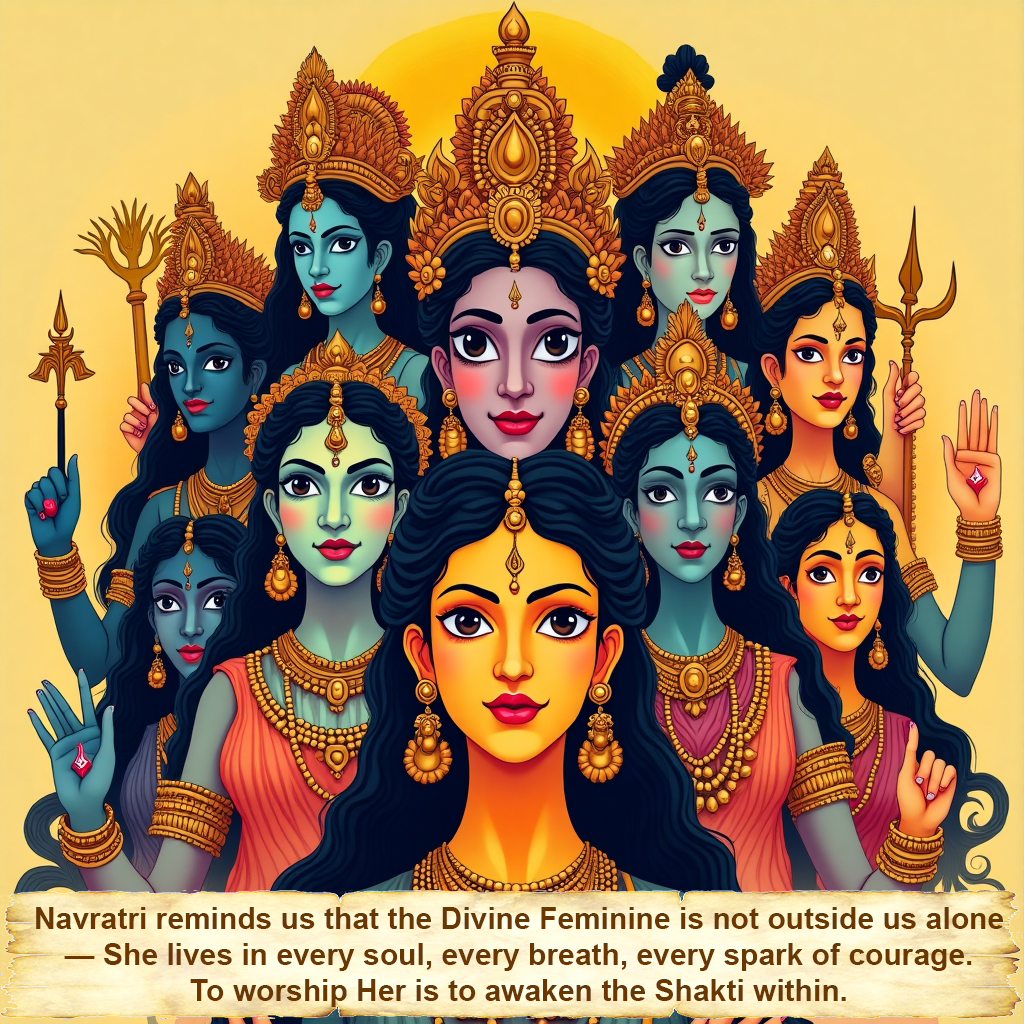
Navratri reminds us that the Divine Feminine is not abstract. She is real, living, and breathing through us.
The Outer and Inner Navratri
Most of us celebrate Navratri outwardly with fasting, prayers, and rituals. But the scriptures and wisdom of the sages invite us to also celebrate an inner Navratri.
- The outer Navratri is about worshipping the goddess through lamps, mantras, and offerings.
- The inner Navratri is about recognizing and cultivating the goddess qualities within our heart and mind.
Just as we decorate temples with flowers, we can decorate our inner temple with virtues. Just as we offer fruits to the goddess, we can offer our ego, anger, and greed to be purified.
Every fast becomes symbolic of letting go of distractions. Every chant becomes a call to awaken inner strength. Every lamp lit in devotion also lights a lamp inside the soul.
The Nine Nights as a Journey of Awakening
Navratri can be understood as nine steps to awakening Shakti within us. Each night corresponds to one aspect of the goddess and one stage of inner growth.
- Shailaputri – Strength of the Earth
The journey begins with grounding. Just as Shailaputri (daughter of the mountains) symbolizes stability, the first step of inner awakening is to become steady and rooted. Without grounding, no spiritual practice can stand firm. - Brahmacharini – Discipline and Devotion
The second form inspires us to cultivate discipline, purity, and a spirit of learning. Here we learn that Shakti is not just wild energy but also focus and dedication. - Chandraghanta – Courage to Face Challenges
The crescent-moon goddess represents inner balance and courage. This stage is about recognizing that true power comes not from aggression but from calm strength. - Kushmanda – The Creative Power
Known as the creator of the universe, Kushmanda symbolizes the womb of existence. Within us, this is the awakening of creativity—the ability to bring light, joy, and new ideas into the world. - Skandamata – Nurturing Energy
The motherly aspect of the goddess reminds us that strength is not only in battle but also in love, care, and compassion. Shakti within expresses as the ability to nurture others and ourselves. - Katyayani – Fierce Protection
At this stage, the goddess is invoked to destroy negativity. Inwardly, this is the power to face our own inner demons—fear, doubt, anger—and cut them at the root. - Kalaratri – Transformation through Darkness
The dark form of the goddess teaches us not to fear the unknown. Every seeker must pass through darkness, uncertainty, and inner struggle. Shakti guides us through these nights of the soul. - Mahagauri – Purity and Renewal
After darkness comes purity. This form symbolizes cleansing, forgiveness, and new beginnings. The soul feels lighter, the mind clearer, and the heart more open. - Siddhidatri – Fulfillment and Wisdom
The final night is the union with wholeness. Here, Shakti blesses us with wisdom, balance, and inner fulfillment. The journey of Navratri ends not in an external temple but in the realization of the temple within.
Navratri as an Inner Practice
How do we practice Navratri as an inward journey? Here are some reflections:
- Fasting as Cleansing
Beyond the body, fasting reminds us to detox the mind—reducing negativity, gossip, distractions, and overthinking. It is a discipline of both stomach and spirit. - Chanting as Awakening
Every mantra carries vibration. Repetition of the goddess names not only pleases the deity but also tunes our consciousness to higher energy. - Dance and Music as Devotion
Garba and Dandiya are not just festive dances; they are circular movements symbolizing the cosmic rhythm of life. When we dance, we align with the heartbeat of the universe. - Lighting the Lamp Within
Each diya lit in our home can be a reminder to light awareness in our hearts—to dispel ignorance and radiate kindness. - Seeing the Goddess in All
Navratri is the perfect time to honor women in our lives as embodiments of Shakti. It is also a time to recognize the goddess in ourselves—whether we are male or female, because Shakti flows in everyone.
Shakti in Everyday Life
Worshipping Shakti does not end with Navratri. Once awakened, we are called to live her energy daily.
- When we face difficulties with courage, we are living Durga.
- When we act with compassion and generosity, we are living Lakshmi.
- When we seek truth and share wisdom, we are living Saraswati.
In this sense, Navratri is not only a festival but also a lifestyle—a reminder that the Divine Feminine energy is always with us, guiding us to live with balance, power, and grace.
Why the World Needs Shakti Now
In our modern times, where stress, division, and imbalance often dominate, the message of Shakti is more relevant than ever. The world needs the qualities of the Divine Feminine:
- Strength without cruelty.
- Compassion without weakness.
- Wisdom without arrogance.
- Creativity without ego.
Navratri offers us a sacred pause to remember these values. It invites us to stop rushing, to bow down, to reflect, and to realign with the energy that sustains life itself.
A Personal Reflection
If you sit quietly during Navratri and close your eyes, you may feel a gentle power within you. It may arise as courage, as peace, as clarity, or simply as stillness. That is the touch of Shakti.
She does not only appear in grand visions; she whispers in our daily choices—in the patience we show, the truth we speak, the care we give, and the battles we endure.
When we begin to see her like this, Navratri stops being just a festival of lamps and songs and becomes a festival of awakening.
Conclusion
Navratri is not only about worshipping the goddess in temples—it is about recognizing her presence within. The nine nights symbolize nine steps of inner transformation, guiding us from grounding and discipline to courage, creativity, compassion, and finally to wisdom.
This Navratri, let us celebrate not only with rituals but also with awareness. Let us fast not only from food but also from negativity. Let us light lamps not only in our homes but also in our hearts. Let us dance not only in circles but also with the rhythm of life.
Above all, let us honor the Divine Feminine within and around us—because Shakti is not somewhere far away; she is here, she is now, she is us.