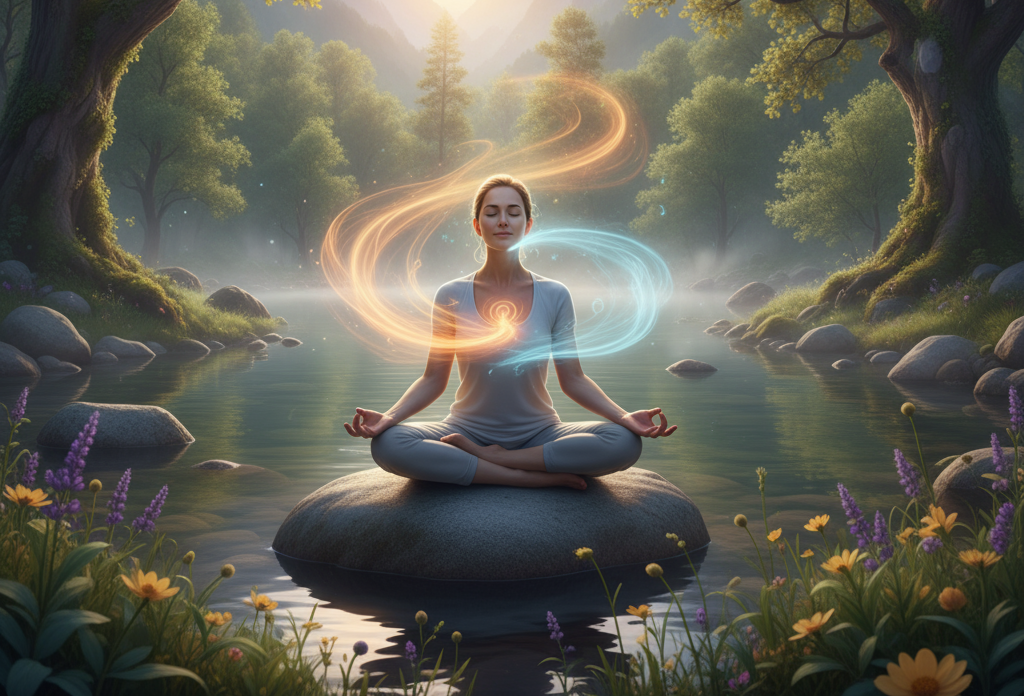
Breath control (Pranayama) and meditation are central pillars of ancient Yoga, offering profound pathways to inner peace and bliss that extend far beyond physical health alone. These practices integrate body, mind, and spirit to harmonize one’s energies and unlock transformative states of wellbeing.
What Is Pranayama? The Ancient Science of Breath
Pranayama is the ancient yogic art of regulating the breath, described in classical texts like the Bhagavad Gita, Yoga Sutras of Patanjali, and the Upanishads. The Sanskrit term “pranayama” combines “prana” (life force or breath) and “ayama” (expansion or control). In yogic philosophy, the breath is considered the vessel of prana—the vital energy that animates the body, mind, and spirit. The systematic techniques of pranayama aim to harmonize this life force, influencing physical vitality, emotional stability, and clarity of consciousness.
The traditional cycle of pranayama consists of three phases:
- Puraka: Inhalation
- Kumbhaka: Retention
- Rechaka: Exhalation
These cycles purify and balance the nadis (energy channels), fostering deep relaxation and heightened awareness.
Why Breath Control Matters
Unlike ordinary, unconscious breathing, deliberate breath control impacts the autonomic nervous system, restoring balance and calm. Ancient yogis discovered that the rhythm and pattern of breath directly affect one’s thoughts and emotions. By mastering pranayama, one can calm anxiety, regulate stress, and cultivate a steady, peaceful mind.
Common techniques include:
- Ujjayi (Victorious breath): Constricts the throat for a slow, audible breath, creating internal warmth and mental focus.
- Nadi Shodhana (Alternate nostril breathing): Balances the right and left hemispheres of the brain and harmonizes prana.
- Bhramari (Bee breath): Produces a humming sound, soothing the nervous system and reducing agitation.
Each practice can be adapted to the practitioner’s needs, whether seeking clarity, energy, or tranquility.
Meditation: Quieting the Mind for Inner Peace
Meditation in yoga is the art of focused attention and awareness, frequently practiced after pranayama. When the breath is calm and rhythmic, the mind naturally becomes quieter and more receptive. Classical meditation techniques might involve focusing on the breath, a single mantra, or observing thoughts non-judgmentally as they arise and fade away.
One example is Nishpanda Bhava—a method emphasizing physical stillness and detachment from distractions. In this practice, individuals allow thoughts and external sounds to pass by without reaction, cultivating spaciousness and deep calm.
Regular meditation practice offers several benefits:
- Deep mental tranquility
- Reduced emotional reactivity
- Enhanced self-awareness
- Heightened sense of presence and acceptance
The Synergy: Pranayama and Meditation for Bliss
Pranayama and meditation work synergistically. Controlled breath calms the body, centers the mind, and creates the ideal conditions for meditation, where profound states of bliss and inner peace are most easily accessed.
Together, these practices:
- Dissolve mental clutter and stress
- Activate the parasympathetic nervous system for relaxation
- Open the doors to self-acceptance and gratitude
- Foster a deep sense of connection—with oneself and the greater existence
Practical Guidance for Seekers
To experience the transformative power of pranayama and meditation:
- Set aside a quiet space and regular time each day.
- Begin with gentle breathing techniques (such as Ujjayi or Nadi Shodhana).
- Practice with awareness, noticing physical, emotional, and mental changes.
- Transition to meditation, focusing on breath, mantra, or open observation.
- Let thoughts come and go, resting in the serenity of each moment.
Consistency is key. With patient practice, inner peace and bliss become natural states, reflecting the deep wisdom of ancient Yoga.
Breath control (pranayama) and meditation are not merely exercises—they are pathways to holistic harmony, self-mastery, and joyful living, as taught by classical yogic sages since time immemorial.